



- Home
- Biological H₂S Scrubber System
Biological H₂S Scrubber System
Advanced & Eco-Friendly Biogas Desulfurization Technology
Biological H₂S Scrubber systems are engineered for efficient hydrogen sulfide (H₂S) removal from biogas streams in Bio-CNG, biogas, and waste-to-energy plants. These systems use naturally occurring sulfur-oxidizing bacteria to convert harmful H₂S gas into sulfate compounds without the use of hazardous chemicals.
Designed for medium and high gas flow applications, the technology offers stable performance, low operating cost, and long equipment life while supporting environmentally sustainable operations.
Why H₂S Removal is Essential in Biogas Plants
Hydrogen sulfide (H₂S) is one of the most corrosive and damaging impurities present in raw biogas. Even at low concentrations, H₂S can:
- Corrode pipelines, compressors, and storage systems
- Damage gas engines and purification equipment
- Reduce the efficiency of downstream processing systems
- Increase maintenance and operational expenses
- Shorten the life of Bio-CNG plant equipment
An efficient H₂S removal system significantly improves plant reliability, equipment protection, and gas quality.
Working Principle of Biological H₂S Scrubber
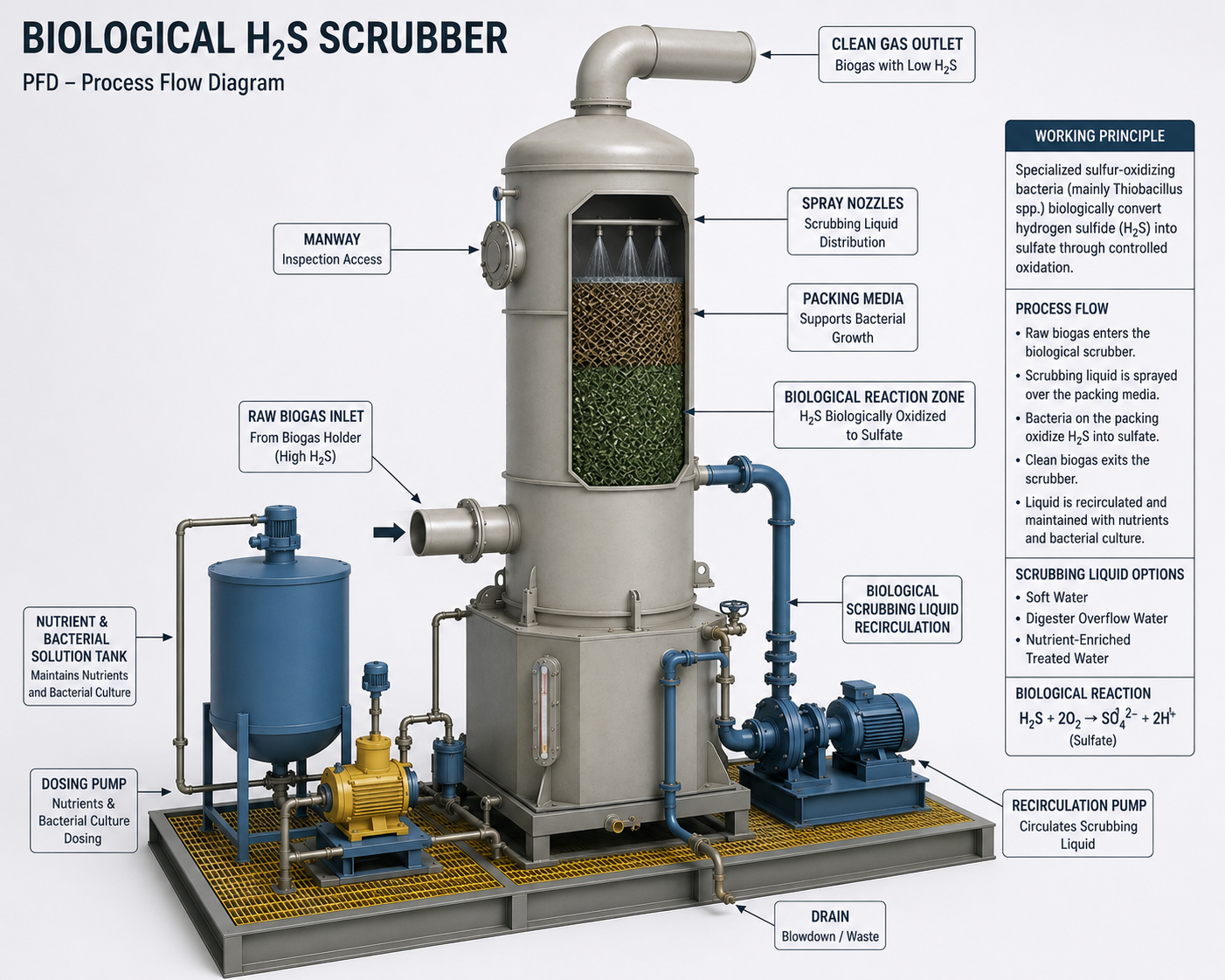
The system operates using specialized sulfur-oxidizing bacteria, mainly from the Thiobacillus family, which biologically convert hydrogen sulfide into sulfate through controlled oxidation reactions.
Process Flow
- Raw biogas from the biogas holder enters an acid-resistant scrubbing tower.
- The tower contains specially designed packing media that supports bacterial growth.
- A controlled amount of air is introduced into the system.
- Scrubbing liquid is continuously sprayed over the packing material.
- Active bacteria oxidize H₂S into sulfate compounds.
- Cleaned biogas exits the scrubber with significantly reduced H₂S concentration.
The recirculating liquid may consist of:
- Soft water
- Digester overflow water
- Nutrient-enriched treated water
Nutrients and bacterial culture are continuously maintained to ensure stable biological activity.
Key Features
Chemical-Free Green Technology
The process does not require harmful chemicals, making it an environmentally sustainable H₂S treatment solution.
Very Low Operating Cost
Low power consumption and minimal chemical usage result in reduced OPEX and maintenance expenses.
High H₂S Removal Efficiency
The system can reduce H₂S concentration from very high inlet levels to nearly non-detectable limits.
Extended Equipment Life
Protects compressors, pipelines, purification units, and engines from corrosion damage.
Low Pressure Drop
Efficient tower design minimizes operational load and may reduce blower requirements.
Suitable for Multiple Feedstocks
Applicable for:
- Press mud-based biogas plants
- Food waste biogas plants
- Cow dung biogas systems
- Industrial organic waste plants
- Sewage and sludge treatment plants
Process Performance
The biological scrubber achieves excellent desulfurization efficiency due to several optimized design factors:
Specialized Packing Media
High surface-area media supports strong bacterial attachment and effective gas transfer.
Optimized Airflow Management
Controlled airflow improves gas-liquid contact and oxidation performance.
Continuous Nutrient Supply
Micronutrients are continuously supplied to maintain healthy bacterial activity.
Uniform Distribution
Even distribution of air and liquid prevents dead zones and maximizes treatment efficiency.
Startup & Operating Conditions
At startup, the reactor is inoculated with activated microorganisms. During operation:
- pH reduction indicates active H₂S oxidation
- Scrubber temperature is generally maintained between 35°C to 50°C
- Airflow is adjusted according to biogas flow variation
- Typical gas retention time ranges from 1.6 to 2.3 seconds
Under optimized conditions, H₂S removal efficiency can exceed 99%.
Sulfate Effluent Utilization
The sulfate-rich effluent generated from the biological scrubbing process can be safely blended with treated digestate water for bio-composting applications. This provides an additional sulfur source for compost enrichment and improves nutrient value.
Advantages of Biological H₂S Scrubber Systems
| Feature | Benefit |
|---|---|
| Chemical-Free Operation | Eco-friendly & sustainable |
| Low OPEX | Reduced operational cost |
| High Removal Efficiency | Better gas quality |
| Corrosion Protection | Longer equipment life |
| Low Maintenance | Stable long-term operation |
| Flexible Integration | Suitable for all biogas plants |
Applications
Biological H₂S Scrubber systems are widely used in:
- Bio-CNG Plants
- Biogas Upgradation Plants
- Waste-to-Energy Projects
- Distillery Waste Treatment Plants
- Food Waste Processing Units
- Municipal Organic Waste Plants
- Sewage Treatment Facilities
- Industrial Anaerobic Digesters
Green & Sustainable Biogas Purification Solution
Biological H₂S removal technology offers a highly efficient, economical, and environmentally responsible solution for modern biogas purification systems. With low maintenance requirements, excellent desulfurization performance, and long operational life, it is one of the most reliable technologies for Bio-CNG and biogas applications.