



- Home
- H₂S Scrubber System by using Caustic NaOH
H₂S Scrubber System by using Caustic NaOH
High-Efficiency Chemical Desulfurization Technology for Biogas & Bio-CBG Plants
Caustic NaOH-based H₂S Scrubber Systems are widely used for the removal of hydrogen sulfide (H₂S) from biogas, Bio-CBG, landfill gas, and industrial gas streams. The system uses a sodium hydroxide (NaOH) solution to chemically absorb and neutralize H₂S gas, resulting in high purification efficiency and stable plant performance.
This technology is highly effective for applications requiring low outlet H₂S concentration, fast reaction rates, and reliable continuous operation. The system is specially designed to allow controlled regeneration and reuse of NaOH solution, significantly reducing chemical consumption and operating costs.
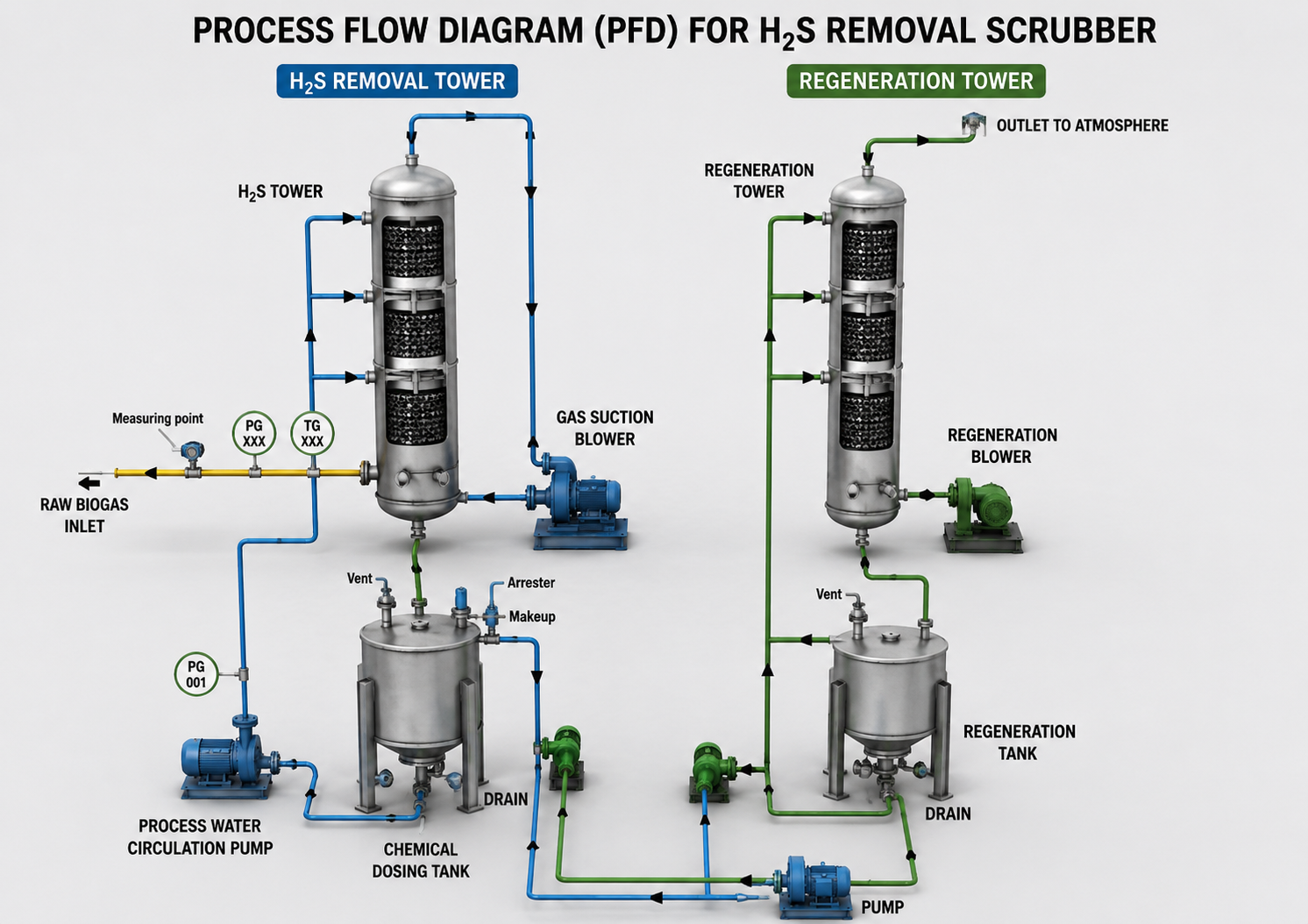
Why H₂S Removal is Important in Biogas Plants
Hydrogen sulfide (H₂S) is a corrosive and toxic gas commonly present in raw biogas. If not removed properly, H₂S can:
- Corrode compressors, pipelines, and storage vessels
- Damage membranes and gas purification systems
- Reduce engine efficiency and operational life
- Increase maintenance and downtime costs
- Create safety and environmental concerns
An efficient H₂S scrubbing system ensures equipment protection, better gas quality, and reliable long-term plant operation.
Working Principle of Caustic NaOH H₂S Scrubber
The system operates on a chemical absorption process where hydrogen sulfide reacts with sodium hydroxide (NaOH) solution inside a packed scrubber tower.
Main Chemical Reactions
The primary reactions are:
H2S + NaOH → NaHS + H2O
Further reaction:
NaHS + NaOH → Na2S + H2O
In controlled oxidation systems, sodium sulfide can be converted into sodium sulfate, allowing partial regeneration and reuse of caustic solution.
Process Description
Step 1 – Raw Biogas Entry
Raw biogas containing H₂S enters the bottom section of the scrubber tower.
Step 2 – NaOH Solution Spraying
A recirculating caustic NaOH solution is sprayed from the top of the scrubber through specially designed nozzles.
Step 3 – Gas-Liquid Contact
The scrubber packing media provides a large contact surface area between biogas and caustic solution, enabling rapid H₂S absorption.
Step 4 – Chemical Neutralization
H₂S reacts with NaOH and converts into sodium sulfide compounds.
Step 5 – Clean Gas Outlet
Purified biogas with significantly reduced H₂S concentration exits from the top of the scrubber.
Step 6 – NaOH Regeneration & Reuse
The spent caustic solution is transferred to a regeneration section where controlled oxidation converts sulfide compounds into reusable forms. The regenerated NaOH solution is then recirculated back into the scrubber system, reducing fresh chemical consumption.
Reuse & Regeneration of NaOH Solution
One of the major advantages of advanced caustic scrubber systems is the ability to regenerate and reuse the NaOH solution.
Regeneration Process
The sulfide-rich solution is exposed to controlled air or oxygen dosing, where sulfides are oxidized into sulfate compounds.
Typical oxidation reaction:
2Na2S + 4O2 → 2Na2SO4
Benefits of NaOH Reuse
- Reduces fresh caustic consumption
- Lowers operating cost
- Minimizes chemical waste generation
- Improves sustainability of plant operation
- Reduces effluent handling requirements
Main Components of the System
Packed Scrubber Tower
FRP or SS construction with corrosion-resistant internal design.
Caustic Solution Tank
Stores and recirculates NaOH solution.
Chemical Dosing System
Maintains proper NaOH concentration and pH levels.
Circulation Pumps
Provider continuos liquid recirculation.
Mist Eliminator
Prevents liquid carryover into downstream systems.
Regeneration Tank
Used for oxidation and reuse of spent caustic solution.
Instrumentation & Controls Includes
• pH monitoring
• ORP monitoring
• Flow control
• Pressure monitoring
• Level control systems
Key Features
Very High H₂S Removal Efficiency
Can reduce H₂S concentration from high ppm levels to very low outlet concentrations.
Fast Chemical Reaction
Provides immediate H₂S absorption with stable performance.
Reusable NaOH Solution
Advanced regeneration systems reduce chemical replacement frequency.
Compact System Design
Requires less installation area compared to some biological systems.
Suitable for Variable Gas Loads
Handles fluctuating H₂S concentrations efficiently.
Continuous Operation
Designed for uninterrupted industrial operation.
Operating Parameters
| Parameter | Typical Range |
|---|---|
| H₂S Removal Efficiency | Up to 99%+ |
| Operating pH | 9 – 12 |
| Scrubber Type | Packed Tower |
| Operating Temperature | Ambient to 50°C |
| Liquid Recirculation | Continuous |
| Construction Material | FRP / SS / HDPE |
Performance Factors
Several factors influence the efficiency of the caustic H₂S scrubber system:
NaOH Concentration
Maintaining proper alkalinity ensures stable H₂S absorption.
Packing Media Design
High surface-area packing improves gas-liquid interaction.
Controlled pH
Continuous pH monitoring prevents efficiency reduction.
Residence Time
Proper contact time ensures complete reaction.
Regeneration Efficiency
Effective oxidation improves NaOH reuse capability.
Advantages of Caustic NaOH H₂S Removal Systems
| Feature | Feature |
|---|---|
| High Removal Efficiency | Superior gas purification |
| Quick Reaction Time | Immediate H₂S absorption |
| Regenerable System | Lower chemical consumption |
| Low Maintenance | Simple operation |
| Compact Footprint | Space-saving installation |
| Industrial Reliability | Stable continuous performance |
Applications
Caustic NaOH H₂S Scrubber systems are commonly used in:
- Bio-CNG Plants
- Biogas Upgradation Systems
- Industrial Biogas Plants
- Distillery Wastewater Plants
- Food Waste Digesters
- Sewage Treatment Plants
- Landfill Gas Projects
- Chemical Process Industries
Sustainable Chemical H₂S Removal Solution
Caustic NaOH-based H₂S scrubber systems provide a highly efficient and reliable solution for biogas desulfurization. With advanced regeneration and reuse capability, these systems offer reduced chemical consumption, lower operating costs, and long-term process stability for Bio-CBG and industrial gas treatment applications.